
Treatment
About the treatment
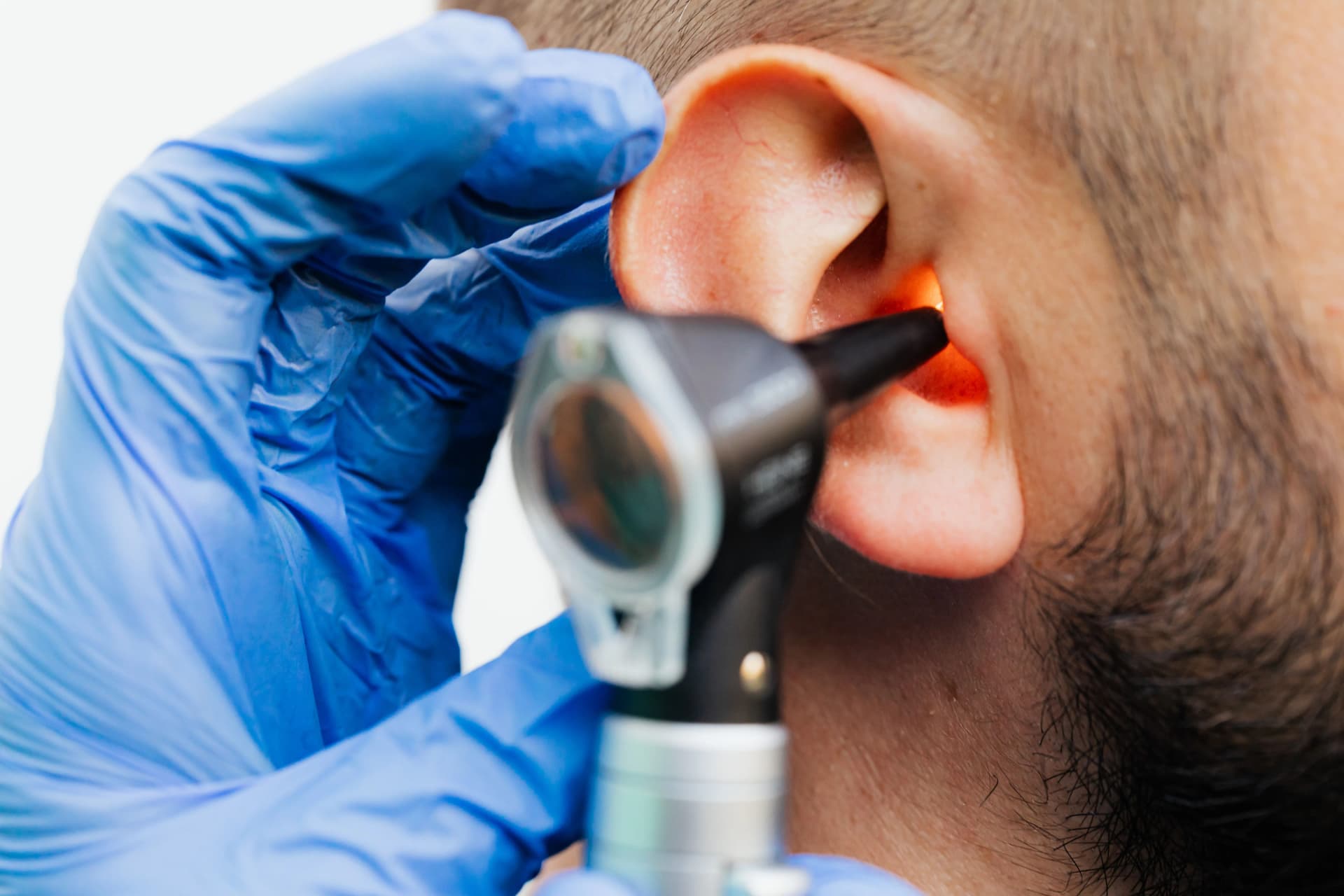
Tympanoplasty is surgery that repairs a hole in the eardrum — the membrane that separates the outer ear from the middle ear — using a small graft of the patient's own tissue. Its goal is to close the perforation to protect the middle ear from infection and, in many cases, improve hearing; when needed, the small hearing bones can be repaired during the same surgery. At Healthcare by the Sea, an outpatient medical center in Puerto Vallarta, board-certified specialists guide you closely through every step, and most patients go home the same day. Schedule a personal consultation to learn what this procedure may achieve in your case.
- Area
- Otolaryngology (ENT)
- Body area
- Ear
- Setting
- Outpatient
- Type
- Surgical
Who is a candidate?
You may be a candidate for tympanoplasty if you have an eardrum perforation that has not healed on its own — after an infection, an injury, or a sudden change in pressure — if you get repeated ear infections or drainage, or if the perforation affects your hearing or keeps you from getting your ear wet with confidence.
During your consultation, the specialist examines the ear with a microscope or an endoscope, reviews your medical history, and usually orders a hearing test to establish how well you hear; the ear should be free of active infection before surgery. Depending on your case, the specialists at Healthcare by the Sea will help you decide whether tympanoplasty is right for you.
How it is performed
Tympanoplasty is performed under anesthesia: usually general anesthesia or, for selected perforations, local anesthesia with sedation, depending on your case and what your surgeon recommends.
The surgeon reaches the eardrum through the ear canal — often with the help of an endoscope — or through a small incision behind the ear. A graft of the patient's own tissue, such as fascia from the temporalis muscle or cartilage from the tragus, is placed to close the perforation and held in position with a sponge-like packing that dissolves on its own while the graft heals into place. If the small bones of the middle ear are damaged, they can be repaired or rebuilt during the same procedure.
Afterward, you rest in a recovery room under close observation by the medical team. As an outpatient procedure, most patients return home later the same day, with clear instructions and the attentive support of our team.
Preparation
Everything starts with a consultation: the specialist reviews your medical history and hearing tests, examines the ear to confirm the size and location of the perforation, and talks with you about what surgery may achieve in your case. If there is an active infection or drainage, treatment may be prescribed first so the ear is dry at the time of surgery.
Your doctor may ask you to stop, with the timing they indicate, medications that increase bleeding — such as aspirin, ibuprofen, or certain blood thinners — as well as some herbal supplements; do so only if your doctor advises it. If you smoke or vape, stopping is important, since tobacco makes it harder for the graft to heal.
Arrange for someone to drive you home after the procedure and, if possible, stay with you the first night. Our team in Puerto Vallarta can help you coordinate these details — especially if you are traveling from another city or from the U.S. or Canada.
Recovery
After surgery, it is normal for the ear to feel blocked, for sounds to seem muffled, and for a little drainage to appear during the first days: the packing that supports the graft dissolves gradually, so hearing tends to improve over the following weeks as the ear heals. Mild discomfort or a pulsing sensation in the ear can also occur and, in many cases, eases with the pain reliever your doctor recommends.
Typical care includes keeping the ear dry — protecting it while bathing with a cotton ball coated in petroleum jelly, or as directed — not blowing your nose hard, sneezing with your mouth open, and avoiding strenuous exercise, swimming, and air travel until your doctor clears you. The graft is checked at follow-up visits, and in many cases a new hearing test is done a few weeks or months later to assess your hearing.
Go to the emergency room right away if you develop a high fever, heavy bleeding or discharge from the ear, pain that gets worse instead of better, severe dizziness, weakness in your face, or a sudden loss of hearing, and notify the doctor who performed your procedure as soon as possible.
Medical reference source: Mayo Clinic.
Related procedures
Otolaryngology (ENT)
Septoplasty
Septoplasty is surgery that straightens the nasal septum — the wall of bone and cartilage that divides the nostrils — when it is deviated and blocks the flow of air. By correcting the deviation, it aims to improve breathing and ease problems such as persistent congestion or frequent nosebleeds. At Healthcare by the Sea, an outpatient medical center in Puerto Vallarta, board-certified specialists guide you closely through every step, and most patients go home the same day. Schedule a personal consultation to learn what this procedure may achieve in your case.
View details Most requested
Plastic, Aesthetic and Reconstructive Surgery
Otoplasty
Otoplasty is surgery that changes the shape, position, or size of the ears — for example, when they stick out farther than you'd like or are misshapen from birth or after an injury. It is an outpatient procedure, and most patients go home the same day. At Healthcare by the Sea, an ambulatory medical center in Puerto Vallarta, our certified specialists guide you closely through every step. Schedule a personalized consultation to find out whether otoplasty is right for you.
View details Most requested
Otolaryngology (ENT)
Rhinoplasty
Rhinoplasty is surgery that changes the shape of the nose — to improve its appearance, to make breathing easier, or both. It can modify the bone, cartilage, and skin of the nose, always following a plan tailored to your facial features and goals. At Healthcare by the Sea, an outpatient medical center in Puerto Vallarta, board-certified specialists guide you closely through every step, and most patients go home the same day. Schedule a personal consultation to learn what this procedure may achieve in your case.
View details