
Treatment
About the treatment
Septoplasty is surgery that straightens the nasal septum — the wall of bone and cartilage that divides the nostrils — when it is deviated and blocks the flow of air. By correcting the deviation, it aims to improve breathing and ease problems such as persistent congestion or frequent nosebleeds. At Healthcare by the Sea, an outpatient medical center in Puerto Vallarta, board-certified specialists guide you closely through every step, and most patients go home the same day. Schedule a personal consultation to learn what this procedure may achieve in your case.
- Area
- Otolaryngology (ENT)
- Body area
- Nasal septum
- Setting
- Outpatient
- Type
- Surgical
Who is a candidate?
You may be a candidate for septoplasty if a deviated septum makes it hard to breathe through one or both nostrils, causes persistent congestion, frequent nosebleeds, or recurring sinus infections, or interferes with your sleep. It is also considered when the blockage does not improve with medications such as nasal sprays or allergy treatments.
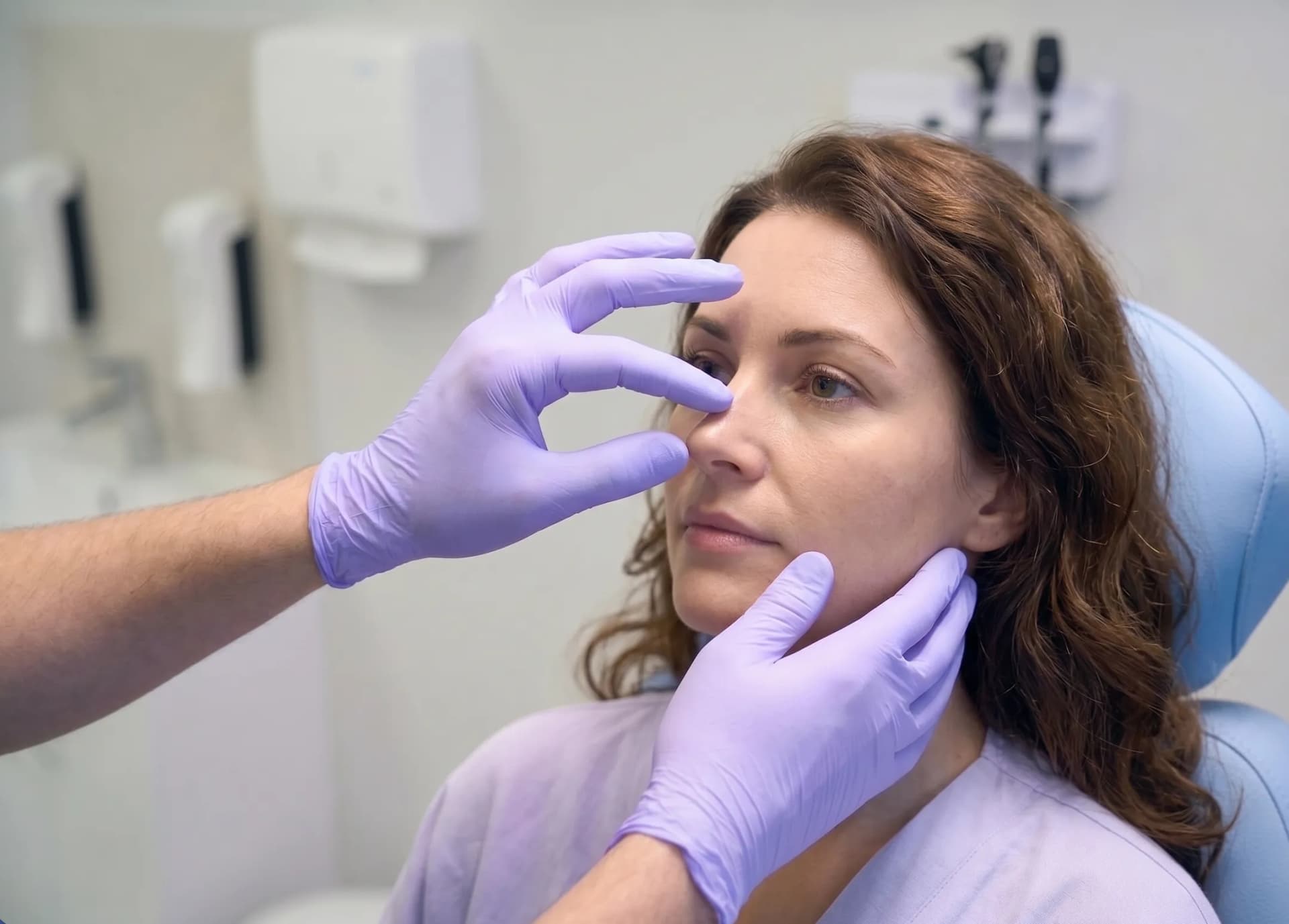
During your consultation, the specialist reviews your medical history and the medications you take, and examines the inside of your nose — sometimes with a small camera — to confirm the deviation and rule out other causes of blockage. Depending on your case, the specialists at Healthcare by the Sea will help you decide whether septoplasty is right for you.
How it is performed
Septoplasty is performed under anesthesia: either local anesthesia with sedation — the usual choice in an outpatient setting — or general anesthesia, depending on how complex your case is and what your surgeon recommends.
The surgeon works through incisions inside the nose, so there are usually no visible scars. The lining that covers the septum is carefully lifted, the deviated portions of bone and cartilage are removed or reshaped, and the lining is then placed back over the septum. Soft silicone splints are sometimes left inside to support the septum while it heals, and when needed, septoplasty can be combined with turbinate reduction or other steps to further improve airflow.
Afterward, you rest in a recovery room under close observation by the medical team. As an outpatient procedure, most patients return home later the same day, with clear instructions and the attentive support of our team.
Preparation
Everything starts with a consultation: the specialist reviews your medical history, examines your nose inside and out, and talks through your symptoms and expectations with you to confirm that the deviated septum is the cause of the blockage and to plan the surgery.
Your doctor may ask you to stop, with the timing they indicate, medications that increase bleeding — such as aspirin, ibuprofen, or certain blood thinners — as well as some herbal supplements; do so only if your doctor advises it. If you smoke or vape, stopping is important, since tobacco irritates the nasal lining and slows healing.
Arrange for someone to drive you home after the procedure and, if possible, stay with you the first night. Our team in Puerto Vallarta can help you coordinate these details — especially if you are traveling from another city or from the U.S. or Canada.
Recovery
After surgery, it is normal for your nose to feel congested and a little sore, with light bleeding or drainage during the first days; sleeping with your head elevated helps reduce swelling. If internal splints were placed, they are usually removed at a follow-up visit, in many cases within the first week or two.
For several weeks, avoid strenuous exercise and heavy lifting, don't blow your nose, sneeze with your mouth open, and choose clothing that fastens in front so you don't brush against your nose while dressing. Breathing tends to improve gradually as the swelling goes down; nasal tissues stabilize over a few months, although the cartilage may continue to settle for up to a year.
Go to the emergency room right away if you develop a high fever, heavy nosebleeds that do not stop, pain that gets worse instead of better, or trouble breathing, and notify the doctor who performed your procedure as soon as possible.
Medical reference source: Mayo Clinic.
Related procedures
 Most requested
Otolaryngology (ENT)
Rhinoplasty
Rhinoplasty is surgery that changes the shape of the nose — to improve its appearance, to make breathing easier, or both. It can modify the bone, cartilage, and skin of the nose, always following a plan tailored to your facial features and goals. At Healthcare by the Sea, an outpatient medical center in Puerto Vallarta, board-certified specialists guide you closely through every step, and most patients go home the same day. Schedule a personal consultation to learn what this procedure may achieve in your case.
View details
Otolaryngology (ENT)
Tympanoplasty
Tympanoplasty is surgery that repairs a hole in the eardrum — the membrane that separates the outer ear from the middle ear — using a small graft of the patient's own tissue. Its goal is to close the perforation to protect the middle ear from infection and, in many cases, improve hearing; when needed, the small hearing bones can be repaired during the same surgery. At Healthcare by the Sea, an outpatient medical center in Puerto Vallarta, board-certified specialists guide you closely through every step, and most patients go home the same day. Schedule a personal consultation to learn what this procedure may achieve in your case.
View details Most requested
Plastic, Aesthetic and Reconstructive Surgery
Otoplasty
Otoplasty is surgery that changes the shape, position, or size of the ears — for example, when they stick out farther than you'd like or are misshapen from birth or after an injury. It is an outpatient procedure, and most patients go home the same day. At Healthcare by the Sea, an ambulatory medical center in Puerto Vallarta, our certified specialists guide you closely through every step. Schedule a personalized consultation to find out whether otoplasty is right for you.
View details