
Treatment
About the treatment
Hemorrhoid surgery covers several procedures to treat hemorrhoids that have not improved with dietary changes, medications, or other conservative measures. Depending on the type and size of the hemorrhoids, the surgeon may remove them (hemorrhoidectomy) or reposition the tissue and reduce its blood supply using techniques such as stapled hemorrhoidopexy. At Healthcare by the Sea, an outpatient medical center in Puerto Vallarta, board-certified specialists guide you closely through every step, and most patients go home the same day. Schedule a personal consultation to learn which option may be right for your case.
- Area
- General surgery
- Body area
- Anus and rectum
- Setting
- Outpatient
- Type
- Surgical
Who is a candidate?
You may be a candidate for hemorrhoid surgery if you have internal or external hemorrhoids that cause recurring bleeding, pain, prolapse (tissue that bulges out of the anus), or persistent discomfort despite conservative measures such as more fiber, sitz baths, and topical medications. Surgery is also often considered when less invasive procedures, such as rubber band ligation, have not worked as expected or are not a good fit for your situation.
During your consultation, the specialist reviews your medical history, your symptoms, and the medications you take, and examines the anal area and rectum to confirm the diagnosis and rule out other causes of bleeding. With that information, the specialists at Healthcare by the Sea will help you decide, based on your case, which surgical option is right for you.
How it is performed
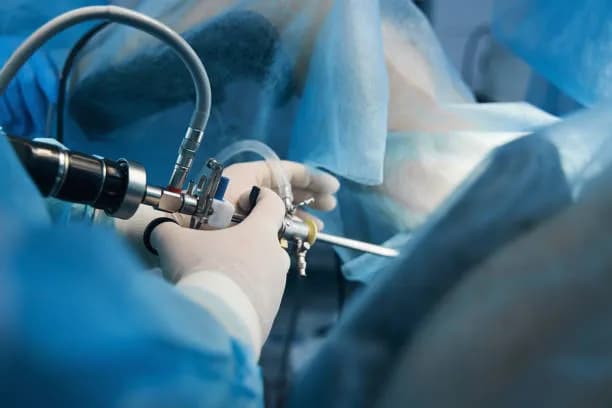
Hemorrhoid surgery is performed under anesthesia: it may be local anesthesia with sedation, regional anesthesia — which numbs you from the waist down — or general anesthesia, depending on the technique chosen, your overall health, and your surgical team's recommendation.
In a hemorrhoidectomy, the surgeon removes the hemorrhoid tissue through small incisions around the anus; this is the usual option for large or external hemorrhoids and for cases that come back. In stapled hemorrhoidopexy, prolapsed internal hemorrhoid tissue is repositioned and its blood supply is reduced, so the hemorrhoids gradually shrink. Your specialist will explain which technique fits your situation.
Afterward, you rest in a recovery room under close observation by the medical team. As an outpatient procedure, most patients return home later the same day, with clear instructions for managing discomfort and caring for the area at home.
Preparation
Everything starts with a consultation: the specialist reviews your medical history and the medications you take, examines the anal area, and, if needed, orders additional tests to confirm the diagnosis and plan the procedure.
Follow your doctor's instructions about fasting and bowel preparation, if your case calls for it. Stop medications that increase bleeding — such as aspirin, ibuprofen, or blood thinners — only if your doctor tells you to, and with the lead time they indicate. If you smoke, it is best to stop, since smoking slows healing.
Arrange for someone to drive you home after the procedure and stay with you for the first few hours. Our team in Puerto Vallarta can help you coordinate these details — especially if you are traveling from another city or from the U.S. or Canada.
Recovery
After surgery, it is normal to feel pain and a sense of fullness or pressure in the anal area, especially during bowel movements in the first days. Your doctor may recommend pain relievers, stool softeners, and warm sitz baths several times a day to ease discomfort and support healing.
In many cases you can return to light activities within a few days, and most of the recovery tends to happen over roughly one to two weeks, although complete healing may take several weeks. During that time, eat a high-fiber diet, drink plenty of fluids, and avoid straining during bowel movements and heavy lifting, always following your medical team's instructions.
Go to the emergency room right away if you develop a high fever, heavy rectal bleeding, trouble urinating, pain that gets worse instead of better, or foul-smelling drainage from the surgical area, and notify the doctor who performed your procedure as soon as possible.
Medical reference source: Mayo Clinic.
Related procedures
 Most requested
General surgery
Hernia repair
Hernia repair surgery corrects the bulging of tissue — often part of the intestine — through a weak spot in the abdominal wall, most commonly in the groin. Hernias do not go away on their own, and when they become painful or grow larger, surgical repair helps relieve discomfort and prevent complications. At Healthcare by the Sea, an outpatient medical center in Puerto Vallarta, board-certified specialists perform this procedure with modern techniques, and most patients go home the same day. Schedule a personalized consultation to learn which approach may be right for your case.
View details
General surgery
Gallbladder surgery (cholecystectomy)
Gallbladder surgery, or cholecystectomy, removes the gallbladder — a small organ beneath the liver that stores bile. It is the usual treatment for gallstones that cause symptoms, such as abdominal pain or inflammation. Today it is most often performed laparoscopically, through small incisions, which supports a quicker recovery. At Healthcare by the Sea, an outpatient medical center in Puerto Vallarta, board-certified specialists guide you closely through every step, and most patients go home the same day. Schedule a personal consultation to find out whether this procedure is right for you.
View details
Other specialties
Varicose vein surgery
Varicose vein surgery covers a range of procedures to treat varicose veins in the legs — enlarged, twisted veins that can cause aching, heaviness, swelling, or skin changes. Depending on your case, options range from catheter-based ablation — which seals the vein with radiofrequency or laser heat — to ambulatory phlebectomy or ligation and removal of the affected vein. At Healthcare by the Sea, an outpatient medical center in Puerto Vallarta, board-certified specialists guide you closely through every step, and in most cases you go home the same day. Schedule a personal consultation to find out which option is right for your legs.
View details