
Getting up two or three times a night to use the bathroom, noticing that your urine stream has lost its strength, or feeling like your bladder never quite empties is not just "a normal part of aging" you have to live with. These are common signs of an enlarged prostate, and today there are modern, minimally invasive ways to address it.
At Healthcare by the Sea, an outpatient medical center in Puerto Vallarta, Dr. Bricio, urologist with Endolapv, evaluates these kinds of symptoms every day in patients from Mexico, the United States, and Canada. In this article, we explain what benign prostatic hyperplasia is, how to recognize its signs, and when it makes sense to get checked.
What is an enlarged prostate (BPH)?
Benign prostatic hyperplasia (BPH) is the non-cancerous growth of the prostate, the gland that surrounds the urethra just below the bladder. As it grows, it squeezes the channel urine flows through and makes it harder to empty the bladder. According to medical sources such as Mayo Clinic, it is a very common condition in men over 50, and it becomes more frequent with age.
One important point: "benign" means it is not cancer. Even so, the symptoms can disrupt your sleep, work, and daily life, and untreated BPH can lead to complications such as urinary tract infections or urinary retention. That is why it is worth getting evaluated early.
Signs your prostate may be enlarged
Symptoms usually build up gradually, and many men normalize them for years. Pay attention if you notice:
- A weak, slow, or interrupted urine stream.
- A sudden urge to urinate that is hard to postpone.
- Waking up several times a night to urinate (nocturia).
- Trouble getting the stream started, or needing to strain.
- Dribbling at the end, or a feeling that your bladder never fully empties.
- Urinating very frequently during the day.
You don't need to have every symptom on the list: one or two that keep coming back are reason enough for a checkup.
When should you see a urologist?
The practical rule is simple: if urinary symptoms are affecting your rest, forcing you to plan outings around the nearest bathroom, or simply worrying you, it's time for a urology assessment.
Book a consultation if…
- Your symptoms have lasted weeks or months and are getting worse.
- You wake up two or more times a night to urinate.
- You've already tried "holding it" or drinking less, and nothing changes.
- You are 50 or older and have never had your prostate checked.
Warning signs: go to the emergency room
If you cannot urinate at all (acute retention), see blood in your urine, or have a fever with pain when urinating, don't wait for an appointment: go to an emergency department right away.
Minimally invasive options: from medication to Rezum and TURP
Treatment depends on the size of the prostate, how intense the symptoms are, and your overall health. Many cases start with medication; when that isn't enough, or when you'd rather not take pills for life, there are minimally invasive procedures performed on an outpatient basis.
Rezum: water vapor therapy
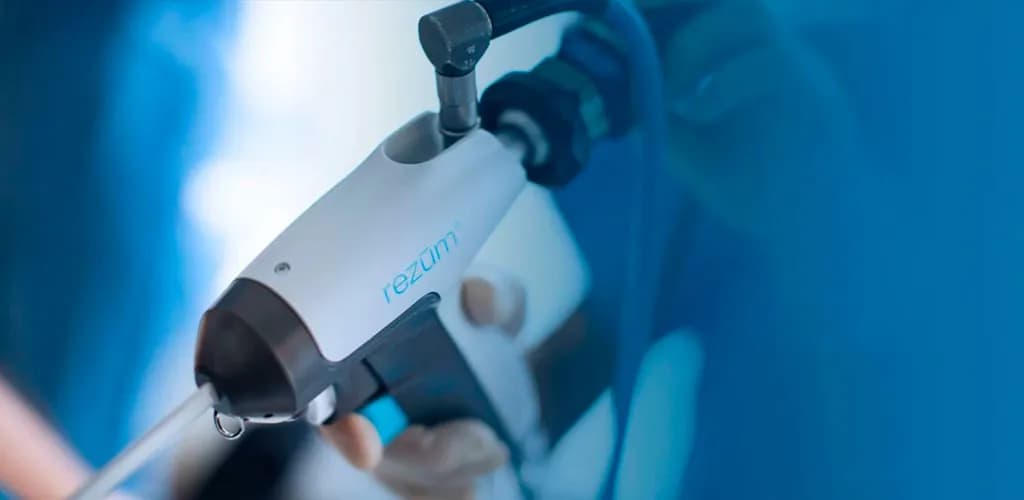
Rezum uses small doses of water vapor to shrink the prostate tissue that is blocking the urethra. It is performed in an outpatient setting and, in most cases, patients go home the same day.
TURP: transurethral resection of the prostate
TURP is a well-established surgical technique that removes the tissue blocking urine flow through the urethra, with no external incisions. Dr. Bricio determines in consultation which option fits your case, because every patient requires an individual evaluation.
Your urology assessment in Puerto Vallarta
At Healthcare by the Sea we combine board-certified specialists, bilingual care in English and Spanish, and an outpatient model designed so that most patients are discharged the same day. If you're traveling from the United States or Canada, we walk you through every step, and you can take your recovery at an easy pace by the sea.
About payment and budgeting: every case is evaluated first, and you receive the information in writing — no surprises. The first step is a consultation with Dr. Bricio to understand the state of your prostate and your real options.
If any of these signs sound familiar, don't brush them off. Schedule a no-obligation assessment with Dr. Bricio and get your questions answered in a single visit. Request an assessment